The phrase Tesla flying car is getting attention, but it needs context. Tesla’s new Roadster demonstration has brought air-assisted sports-car technology into the spotlight. That does not automatically mean a car you can use to fly above everyday traffic.
This guide separates the reported demonstration, Tesla’s product claims and the questions that matter before a dramatic prototype becomes a practical vehicle. Information checked on October 19, 2026.
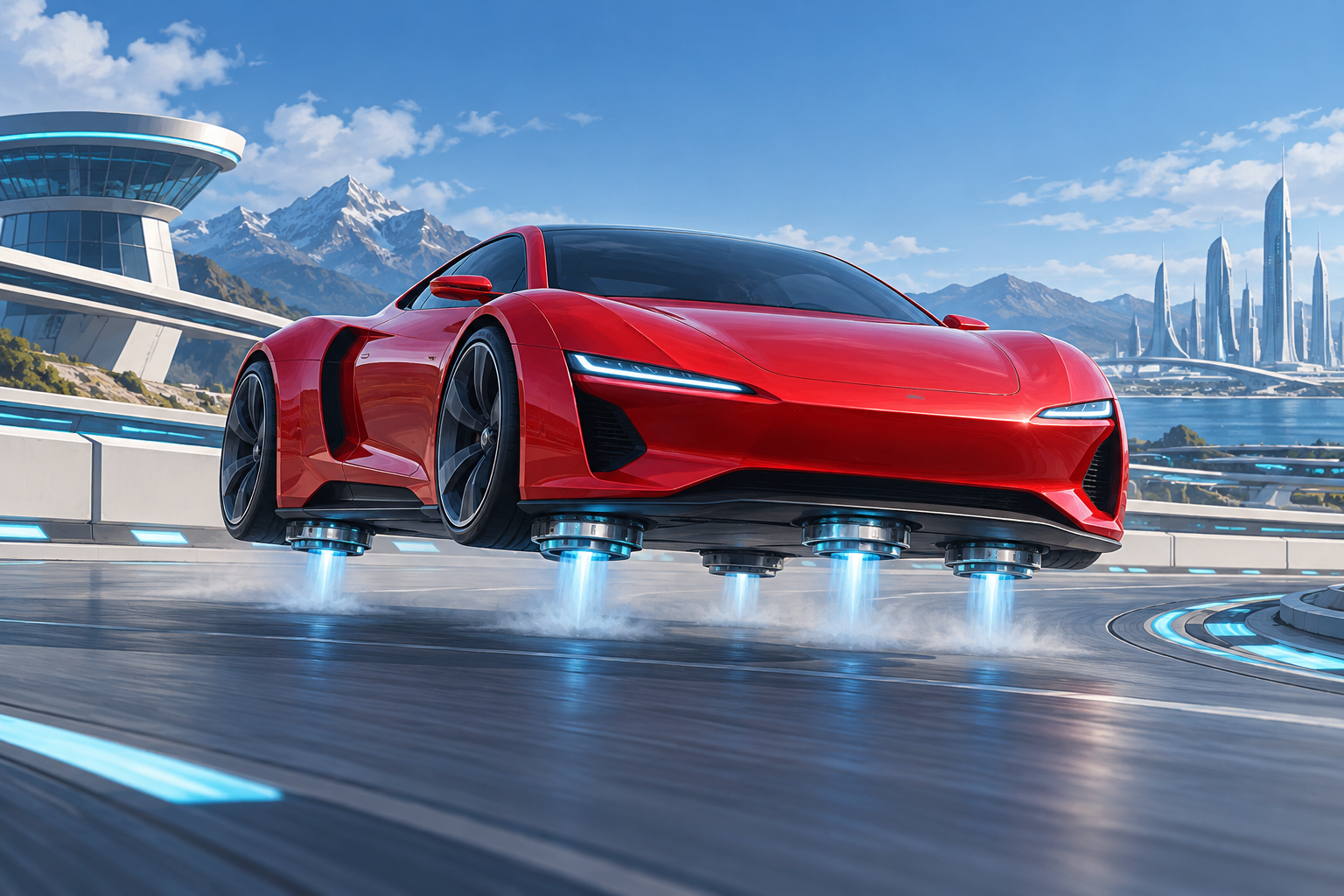
Is the Tesla flying car real?
There is a real demonstration behind the headlines. Associated Press reported that Tesla showed a Roadster performing short airborne manoeuvres at a SpaceX facility in Texas in October 2026. AP also reported that reservations did not guarantee a delivery date or delivery itself. A demonstration is evidence of a particular test, rather than proof of unrestricted road or air use.
What Tesla’s Roadster page actually says
Tesla’s official Roadster page describes optional SpaceX-related equipment. Its published footnotes distinguish the Thrust upgrade from Rocket-only features and say the Rocket trim is not available in every region. Specifications therefore need to be read alongside the trim, market and qualification attached to each claim.
For readers, the useful question is more precise than “does it fly?” Ask what the vehicle demonstrated, for how long, under what conditions and with which equipment. A short hop, controlled hover and sustained journey are different capabilities.
Air-assisted sports car vs flying car vs air taxi
- Air-assisted sports car: the central product is still a road vehicle; additional thrust may change its movement or handling.
- Roadable aircraft: the concept is a vehicle designed for both road travel and meaningful flight. Each role introduces separate engineering questions.
- Air taxi: an aircraft intended to carry passengers between suitable landing locations. It does not need to drive along normal roads.
These are useful comparisons for understanding the headlines, not a legal classification of the Roadster. The FAA’s advanced air mobility resources provide the aviation context. A manufacturer’s demonstration alone does not establish approval for passenger flight.
Five questions to ask before believing a flying-car headline
- What was directly shown? Look for a continuous demonstration and an explanation of the test conditions.
- What remains a manufacturer claim? Keep announced performance separate from independently verified results.
- Is the specification optional? Check the exact version and regional availability.
- What permissions apply? A private test and routine public operation are different milestones.
- Can customers actually receive it? A reservation page, production announcement and delivered vehicle are different stages.
Why this technology is interesting
The interesting engineering story is controlled movement. Adding thrust to a car raises questions about stability, energy use, packaging and how a driver commands the system. Those questions are worth following even without assuming that commuter cars will soon replace aircraft.
Our reading: evaluate the Roadster as an evolving sports-car project with unusual technology. Treat everyday flying-car use as a separate proposition requiring its own evidence.
Frequently asked questions
Can I fly a Tesla above traffic?
The sources linked here do not establish that customers can legally use a Roadster for ordinary flights above public traffic. Do not infer that capability from a stunt or product nickname.
Does a reservation prove a delivery date?
No. Read the current terms for the specific vehicle and market. The reported reservation conditions are an important reason to separate interest in a product from confirmed availability.
Are electric air taxis the same technology?
No. They are aircraft projects with different design goals. Read our Honda hybrid eVTOL explainer for the aircraft side of the story.
Have a technology claim you want explained? Contact TheTechSky with your question, or explore our Technology coverage for more practical explainers.
Leave a Reply